FNS vs Biomaser PMU Machine 2026: Honest Spec-by-Spec Comparison
Biomaser is the single most-searched PMU machine brand outside the premium German tier, and the P90 is the model most artists put next to FNS on price. Here is the comparison with nothing sanded off — including where Biomaser genuinely wins.
What you'll learn
- ·Biomaser P90 vs T500 — which model you are actually comparing
- ·Motor class, stroke and hit rate side by side
- ·Healed retention on oily Fitzpatrick III–V skin
- ·Warranty and APAC service reality
- ·Who should buy Biomaser and who should not
At a glance
FNS vs Biomaser P90 — professional PMU machine comparison, 2026
| Specification | FNS (FINERSKIN) | Biomaser P90 |
|---|---|---|
| Motor class | Swiss coreless | Domestic coreless |
| Stroke length | 3.0 mm fixed | 2.5 mm fixed |
| Max RPM | 10,000 | ~9,000 |
| Vibration at max RPM | < 0.15 mm | ~0.25–0.35 mm |
| Weight | 115 g | ~130 g |
| Cartridge system | Universal | Universal |
| Warranty | 12 months | 6 months |
| APAC service turnaround | 3–7 days (Hong Kong) | 4–6 weeks (mainland China) |
| Price (USD) | $288–$349 | $150–$220 |
Best pick by skin type
Which is right for your Fitzpatrick tone?
-
Fitzpatrick I–II (fair, thin, dry)
Either — Biomaser P90 is sufficient
A 2.5 mm stroke implants easily in thin dry skin; the motor-class gap shows up less.
-
Fitzpatrick III–IV (olive to light brown, combination/oily)
FNS
The 3.0 mm stroke implants in fewer passes, reducing trauma and the week-four fade common on oily skin.
-
Fitzpatrick V–VI (deep, thick, oily)
FNS
Thick dermis needs consistent hit force under load; sub-0.15 mm runout keeps pigment placement even.
Quick answer
Biomaser P90 (USD $150–$220) is a competent entry rotary with a coreless motor, universal cartridge fit and a wide accessory ecosystem — the best-known name in the budget tier. FNS (USD $288–$349) sits one class above: Swiss coreless motor, tighter runout, 12-month warranty and Hong Kong-based APAC service. If you are training or doing fewer than five paid sessions a week, Biomaser is enough. If you are running daily commercial lips and ombré on oily Asian skin, the FNS motor and service window are worth the extra ~$100.
Which Biomaser are you comparing?
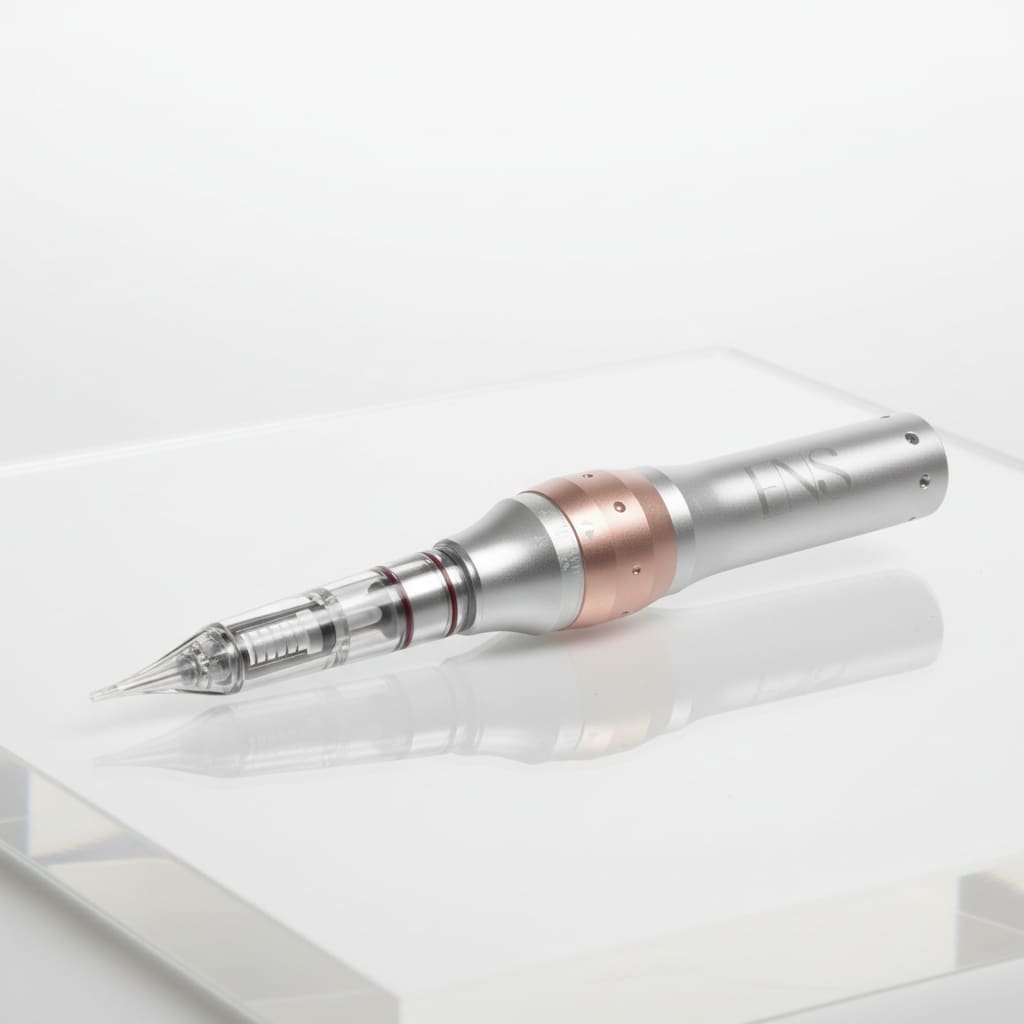
Biomaser sells several machines under similar naming, and reviews online blur them together:
- P90 — the flagship pen, coreless motor, fixed 2.5 mm stroke, wired. This is the one that shows up in "Biomaser PMU machine" searches.
- T500 / K6 — wireless battery pens, heavier in the hand, adjustable-voltage base.
- Older P300 / hand-tool kits — microblading-oriented, not comparable to a rotary machine.
Everything below compares the P90, since that is the direct FNS competitor on price and format.
Side-by-side
| FNS (FINERSKIN) | Biomaser P90 | |
|---|---|---|
| Motor | Swiss coreless | Domestic coreless |
| Stroke | Fixed 3.0 mm | Fixed 2.5 mm |
| Speed range | 4,000–10,000 RPM | ~4,000–9,000 RPM |
| Vibration at max RPM | < 0.15 mm | ~0.25–0.35 mm |
| Cartridge fit | Universal | Universal |
| Weight | 115 g | ~130 g |
| Warranty | 12 months | 6 months (varies by reseller) |
| Service location | Hong Kong depot, 3–7 days | Mainland China, 4–6 weeks |
| Price (USD) | $288–$349 | $150–$220 |
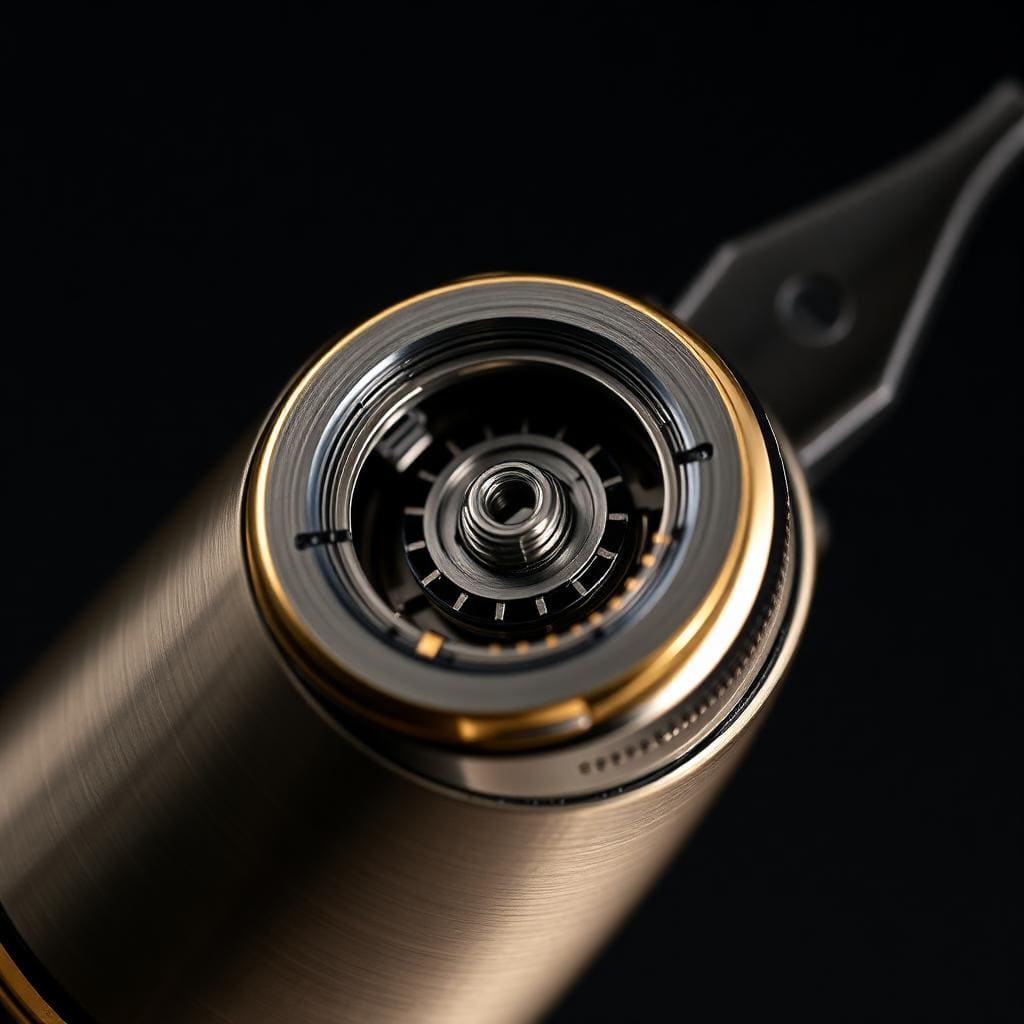
Stroke: 2.5 mm vs 3.0 mm matters more than the spec sheet suggests
A 2.5 mm stroke is a shading-biased stroke. It is gentle, it is forgiving for beginners, and on thin, dry Fitzpatrick I–II skin it produces beautiful soft powder. On thick, oily Fitzpatrick III–V skin — the majority of clients across Hong Kong, Singapore, Bangkok, Jakarta and Ho Chi Minh — a short stroke has to make more passes to implant the same pigment load. More passes means more trauma, more fluid, and more of the pigment pushed back out during healing. That is the mechanism behind the "faded to nothing by week four" complaint that shows up in Biomaser reviews from Asian artists specifically.
FNS ships a fixed 3.0 mm stroke because it is the compromise point: enough hit force to implant in a single controlled pass on oily skin, short enough to keep nano hairstrokes crisp.
Where Biomaser genuinely wins
We are not going to pretend otherwise:
- Price. At $150–$220 it is meaningfully cheaper. For a trainee who is not yet earning from PMU, that gap is real money.
- Availability. Biomaser is everywhere — Amazon, Lazada, Shopee, AliExpress. You can have one tomorrow in most markets.
- Accessory ecosystem. Biomaser-branded cartridges, practice skins and pigment sets are cheap and easy to restock locally.
- Wireless option. If you specifically want a battery pen, the T500 is a solid budget wireless unit; FNS wireless is an add-on module.
Where FNS wins
- Motor lifespan. Swiss coreless motors are rated 8,000–10,000 hours; domestic coreless typically 3,000–4,000. At four hours of machine time a day that is a five-plus-year machine versus a two-to-three-year machine.
- Runout under load. Vibration is what scatters pigment. Below 0.15 mm you can hold a crisp nano stroke at the end of an eight-hour day; above 0.25 mm you cannot.
- Warranty and service window. A 6-month warranty serviced from mainland China means a repair from Singapore or Jakarta costs 4–6 weeks of lost bookings. FNS services APAC from Hong Kong in about a week.
- Pigment pairing. FNS pigments are formulated against the FNS stroke and depth for Fitzpatrick III–V, so healed shift is predictable.
Total cost over five years
| FNS | Biomaser P90 | |
|---|---|---|
| Machine purchases (5 yrs) | 1 × $288 | 2 × $185 = $370 |
| Warranty coverage | 12 mo | 6 mo |
| Typical downtime per repair | 3–7 days | 4–6 weeks |
| 5-year hardware cost | $288 | $370 |
The cheaper machine is the more expensive machine once you replace it twice and lose a month of bookings to a repair shipment.
Bottom line
Buy Biomaser P90 if you are training, practising, or doing occasional work and the $100 gap matters this month. Buy FNS if PMU is your income, your client base is Fitzpatrick III–V, and a four-week repair window would cost you more than the price difference.
Free download
Get the free PMU Aftercare Checklist
A printable 14-day protocol — sent to your inbox. No spam, unsubscribe anytime.
From FNS
FNS Micropigmentation Machine
Swiss coreless motor, 3.0 mm stroke, universal cartridges, 12-month warranty and Hong Kong-based APAC service.
DiscoverFAQ
Frequently asked
For training and low-volume work, yes. It has a coreless motor, universal cartridge fit and costs $150–$220. Its limits are a 2.5 mm stroke that under-implants on oily Fitzpatrick III–V skin, higher vibration, a 6-month warranty and mainland-China service.
Cited summary
The short answer
For professional daily use on Fitzpatrick III–V skin, FNS outperforms the Biomaser P90 on motor class (Swiss coreless vs domestic coreless), stroke length (3.0 mm vs 2.5 mm), vibration (<0.15 mm vs ~0.3 mm) and warranty (12 vs 6 months). Biomaser wins on price ($150–$220 vs $288–$349) and local availability, making it a reasonable training machine.
Sources