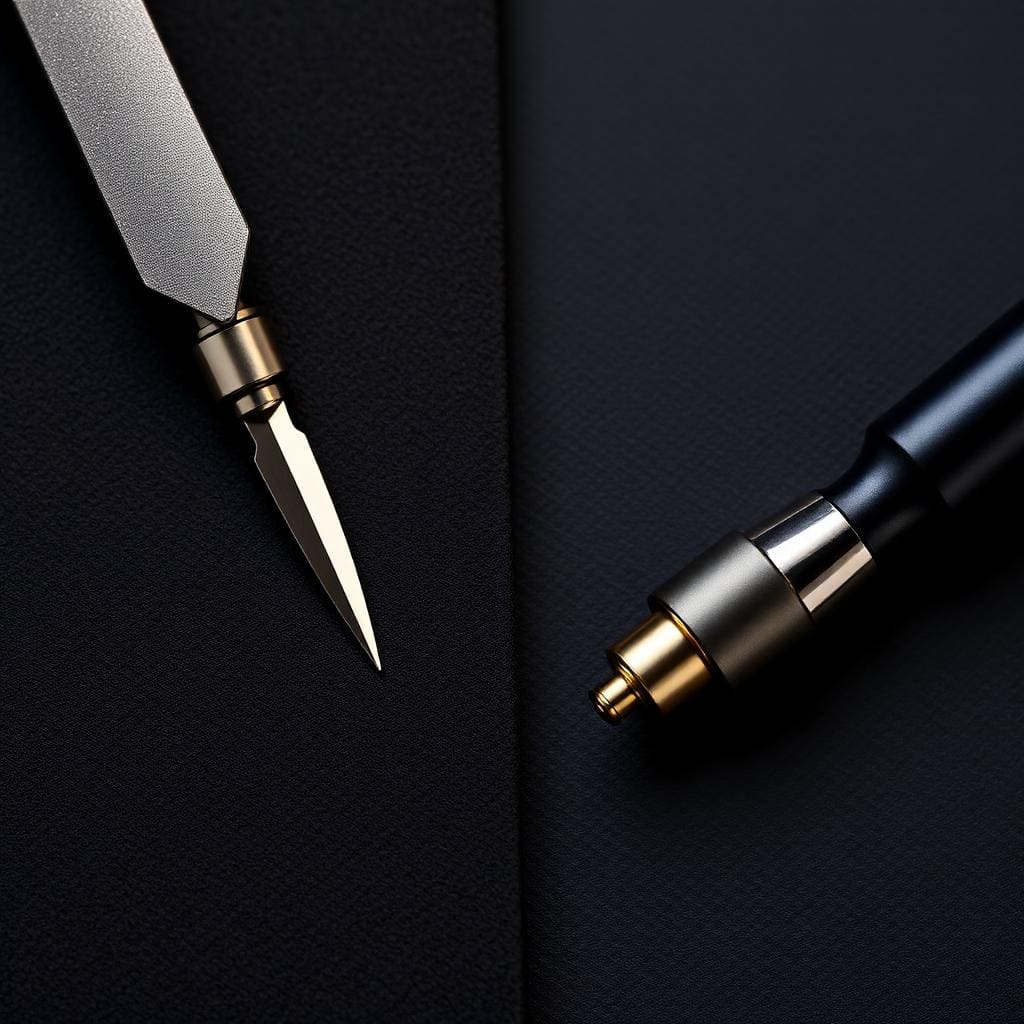
Nano Brows Machine vs Nanoblade: Which Tool Heals Crisper?
Nano brows can be created with a manual nanoblade or with a rotary machine and a single ultra-fine needle. They are not equivalent tools, and they do not heal the same way. Here is the honest comparison.
What you'll learn
- ·How each tool injures the skin
- ·Healed line retention compared
- ·Which suits oily and thick skin
- ·Cost per client over a year
- ·The machine specs that matter
At a glance
Nano brows machine vs nanoblade — healed performance and cost, 2026
| Factor | Nano brows machine | Nanoblade (manual) |
|---|---|---|
| Skin injury | Vertical puncture | Lateral cut |
| Depth control | Machine-set | Hand pressure |
| Fresh line width | 0.18–0.25 mm | 0.15–0.20 mm |
| Healed line width, oily skin | 0.25–0.35 mm | 0.4–0.7 mm |
| Retention at 18 months | 70–85% | 40–60% |
| Performance on thick dermis | Good | Poor |
| Year-one cost (12 clients/mo) | ~$547 | ~$1,512 |
Best pick by skin type
Which is right for your Fitzpatrick tone?
-
Fitzpatrick I–II (fair, dry, thin)
Either
Dry thin skin holds a cut channel well; blade delicacy is a legitimate choice here.
-
Fitzpatrick III–IV (olive, combination)
Nano machine
Sebum widens cut lines; a vertical puncture keeps healed strokes near their fresh width.
-
Fitzpatrick V–VI (deep, thick, oily)
Nano machine
Thick dermis resists blade depth control, producing patchy retention and greyed healing.
Quick answer
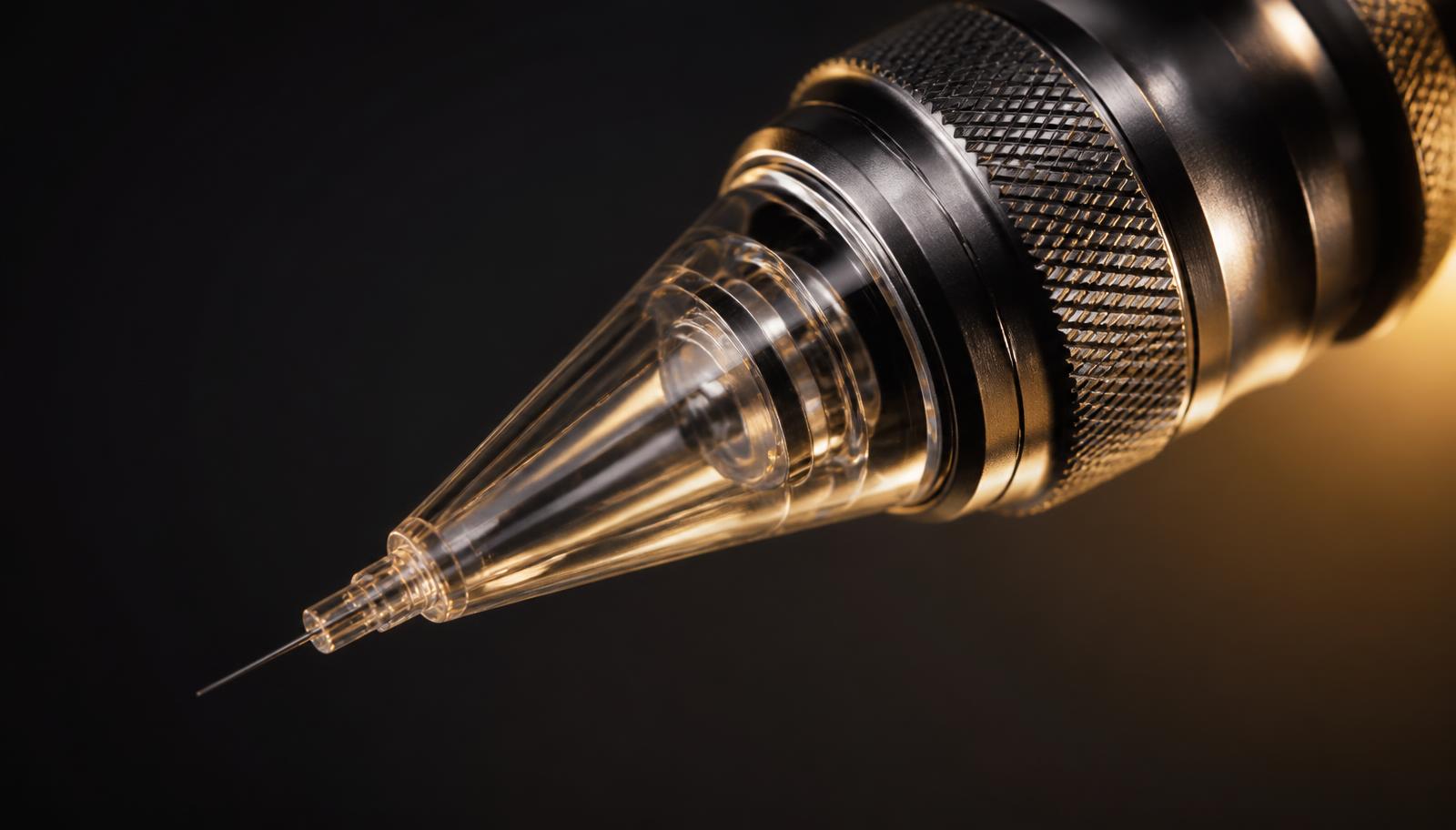
A nano brows machine implants pigment by vertically puncturing a column of skin with a single 0.18–0.25 mm needle. A nanoblade drags a fine blade to cut a channel and deposit pigment into it. The machine produces less trauma, retains crisper lines on oily and thick skin, and heals with less blur. The nanoblade is cheaper to start with and gives a very fine fresh result, but its cut lines spread more over 12–24 months.
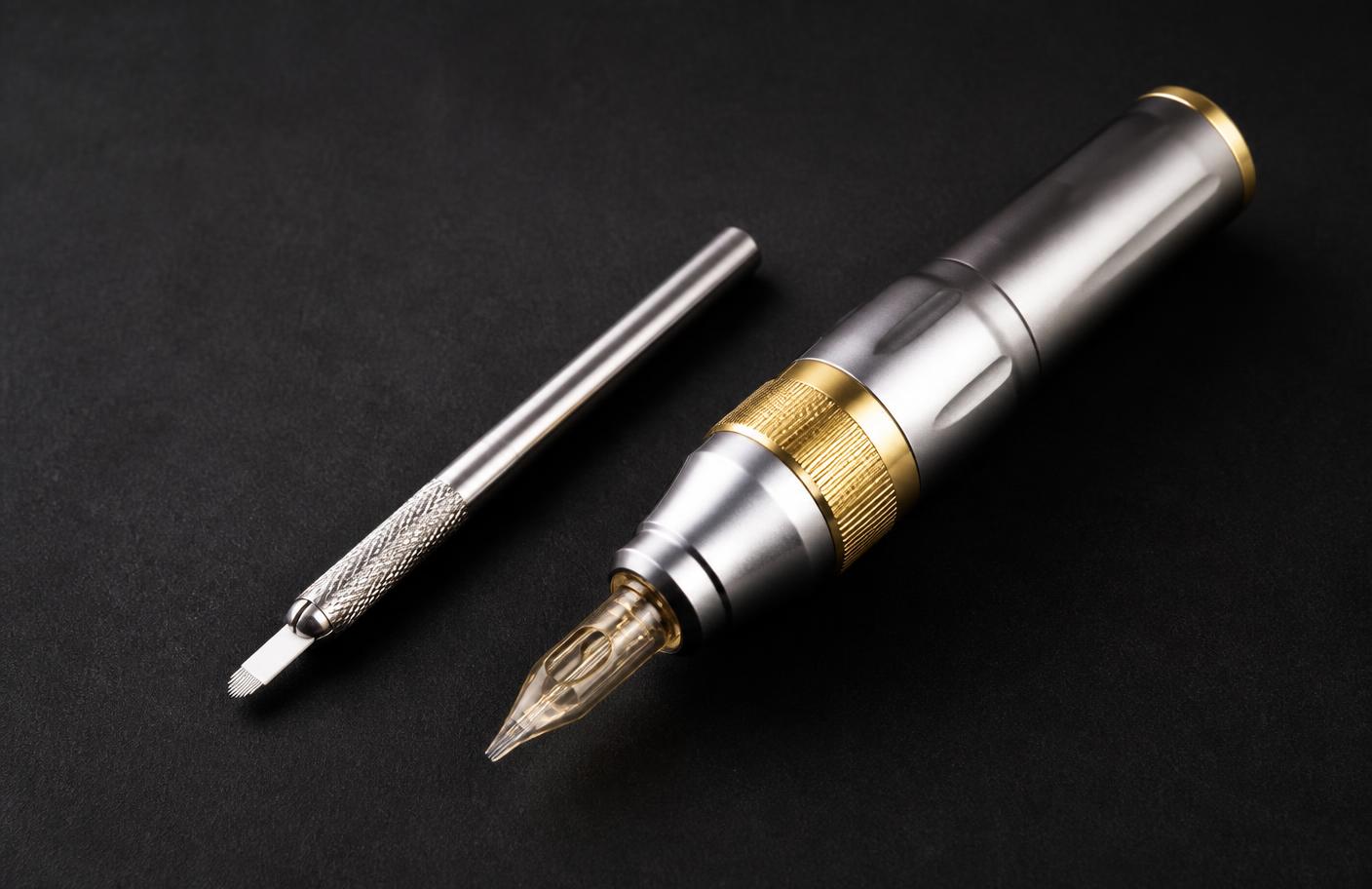
The mechanical difference that decides everything
| Nano brows machine | Nanoblade / manual | |
|---|---|---|
| Skin injury | Vertical puncture, ~0.6 mm deep | Lateral incision, variable depth |
| Depth control | Set by stroke length and motor | Set by hand pressure |
| Scar tissue risk | Low | Higher with repeated passes |
| Line width when fresh | 0.18–0.25 mm | 0.15–0.20 mm |
| Line width healed (oily skin) | 0.25–0.35 mm | 0.4–0.7 mm |
| Retention at 18 months | 70–85% | 40–60% |
| Works on thick dermis | Yes | Poorly |
| Tool cost | $250–$900 once | $2–$5 per blade, ongoing |
A blade's fresh result can look finer than a machine's. The question that matters commercially is what the client photographs at month 14 — because that is when they either rebook or post a disappointed review.
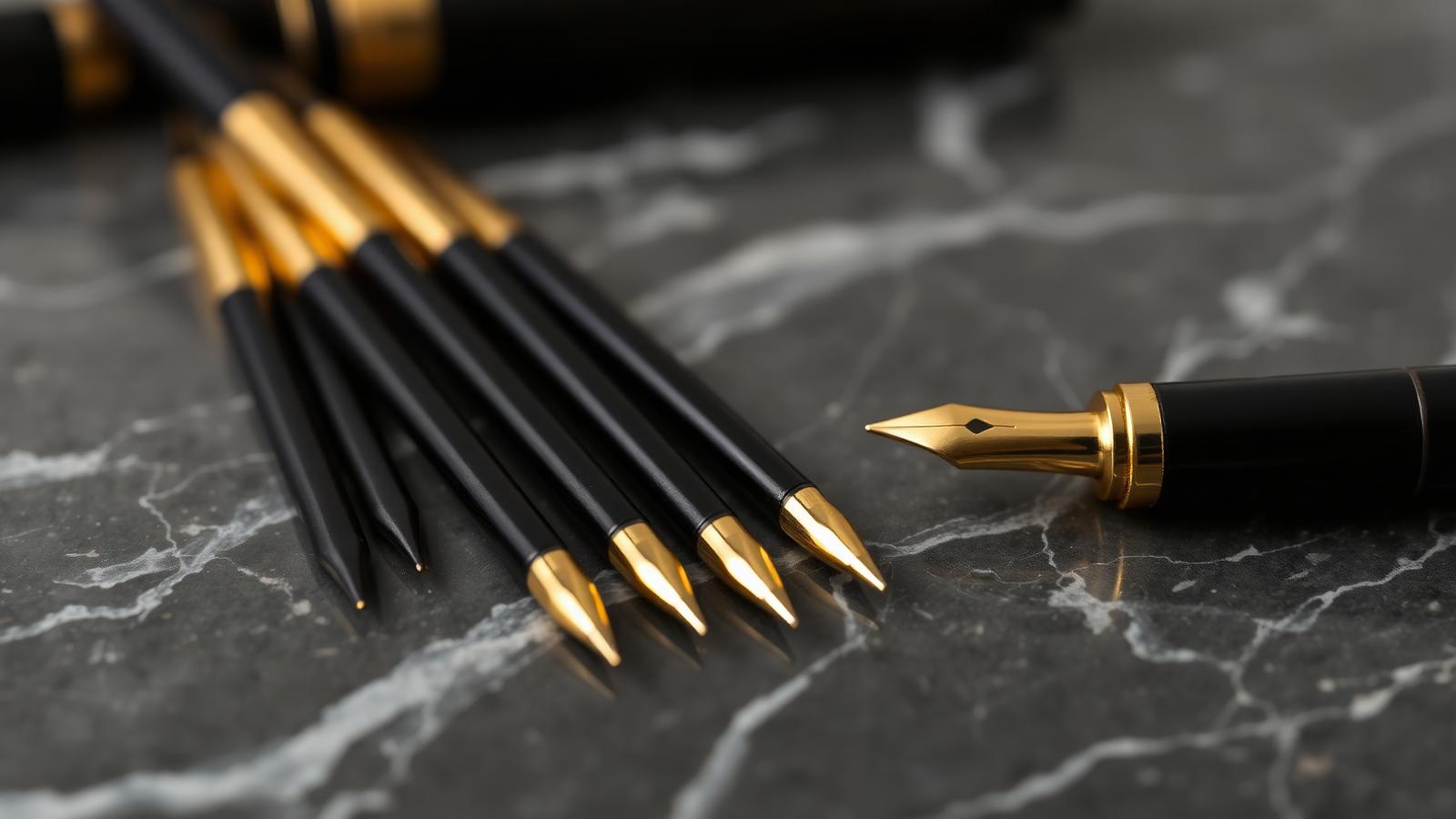
Why "nanoblade alternative" is a search artists make
Most artists who move away from blades do so for three reasons:
- Blur on oily skin. Sebum widens a cut channel. Nothing in technique fully compensates.
- Client fear of cutting. "It's a machine, nothing is cut" is an easier consultation.
- Regulatory pressure. Several Asian and European jurisdictions treat blade work more strictly than machine work; supervisors increasingly prefer cartridges with certified single-use packaging.
What makes a machine capable of true nano work
Not every rotary pen can do hairstrokes. Three specifications separate the ones that can:
- Needle runout under 0.15 mm. A 0.2 mm needle wobbling 0.3 mm draws a 0.5 mm line. This is the single most important number and most listings never publish it.
- Stable RPM under load. A motor that slows when it meets resistance changes depth mid-stroke, which shows as a line that fades in the middle.
- Stroke length 2.5–3.0 mm. Long enough to reach depth, short enough to pull cleanly through a hairstroke.
- Weight 100–120 g, centre-biased. Rear-weighted pens force a tighter grip; tight grips make wobbly lines by hour two.
Cartridge choice: a 1RL 0.18 mm or 0.20 mm, long taper, single-use, for hairstrokes. Anything blunter draws a soft line no matter how good the machine is.
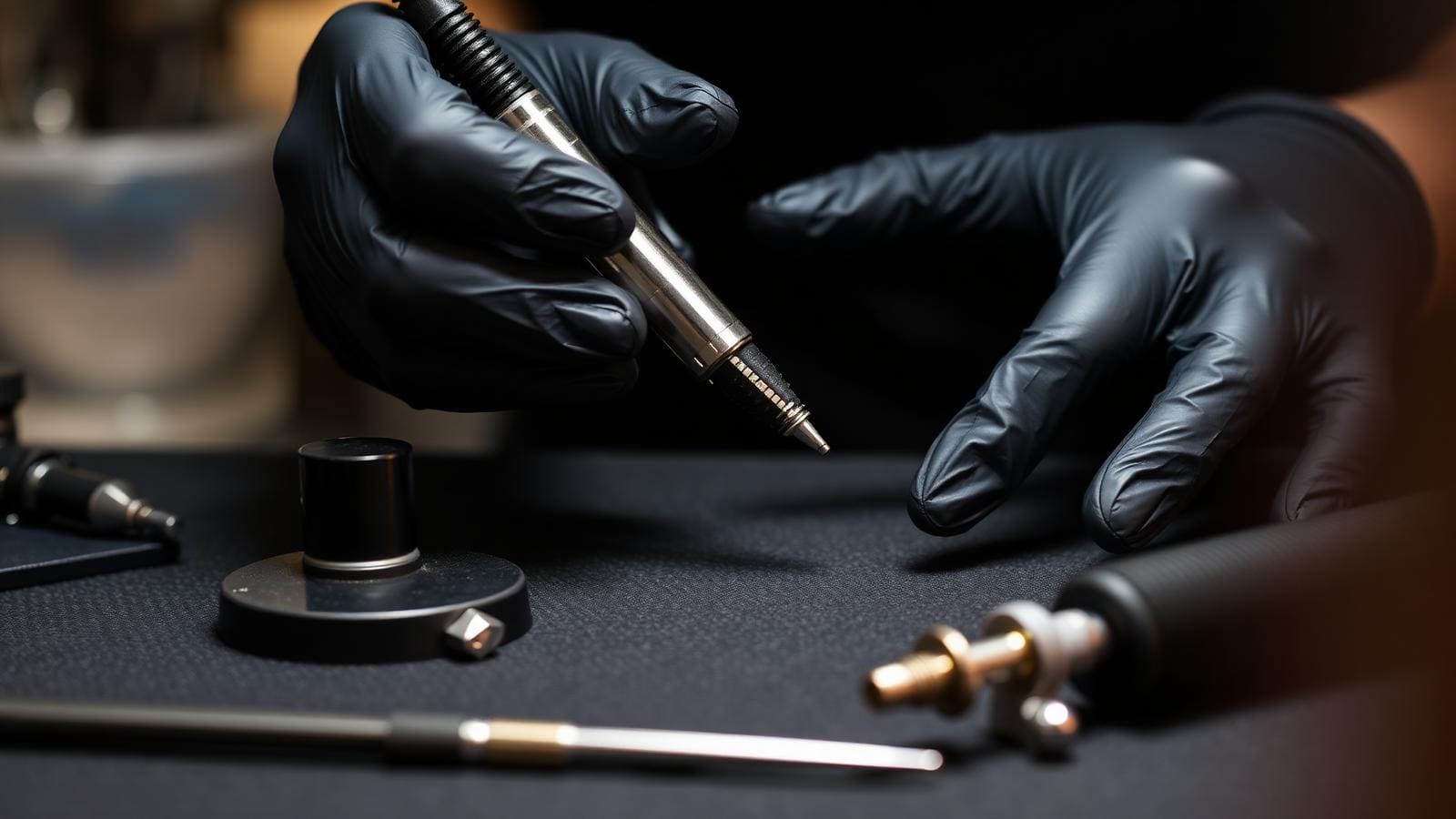
Cost over one year of real work
Assume 12 brow clients a month.
| Machine route | Nanoblade route | |
|---|---|---|
| Tool | $288 once | $0 |
| Consumables | ~$0.90 per cartridge × 2 = $21.60/mo | ~$3.50 per blade × 3 = $126/mo |
| Year one total | ~$547 | ~$1,512 |
| Perfecting sessions caused by blur | Fewer | More (unpaid chair time) |
The blade is cheaper on day one and more expensive by month four. The cost is unpaid correction time.
When a blade still makes sense
On very dry, thin, fair skin with fine natural hair, a skilled blade artist can produce hairstrokes a machine struggles to match in delicacy, and healing on that skin type is forgiving. If that is your entire client base, there is no urgency to switch. Across Fitzpatrick III–V — most of Asia — the machine wins on healed outcome.
Bottom line
For a mixed or Asian client base, a rotary nano machine is the better commercial tool: crisper healed lines, fewer corrections, lower running cost, and an easier consultation. Buy on runout, motor stability and balance, not on the number of preset modes.
Free download
Get the free PMU Aftercare Checklist
A printable 14-day protocol — sent to your inbox. No spam, unsubscribe anytime.
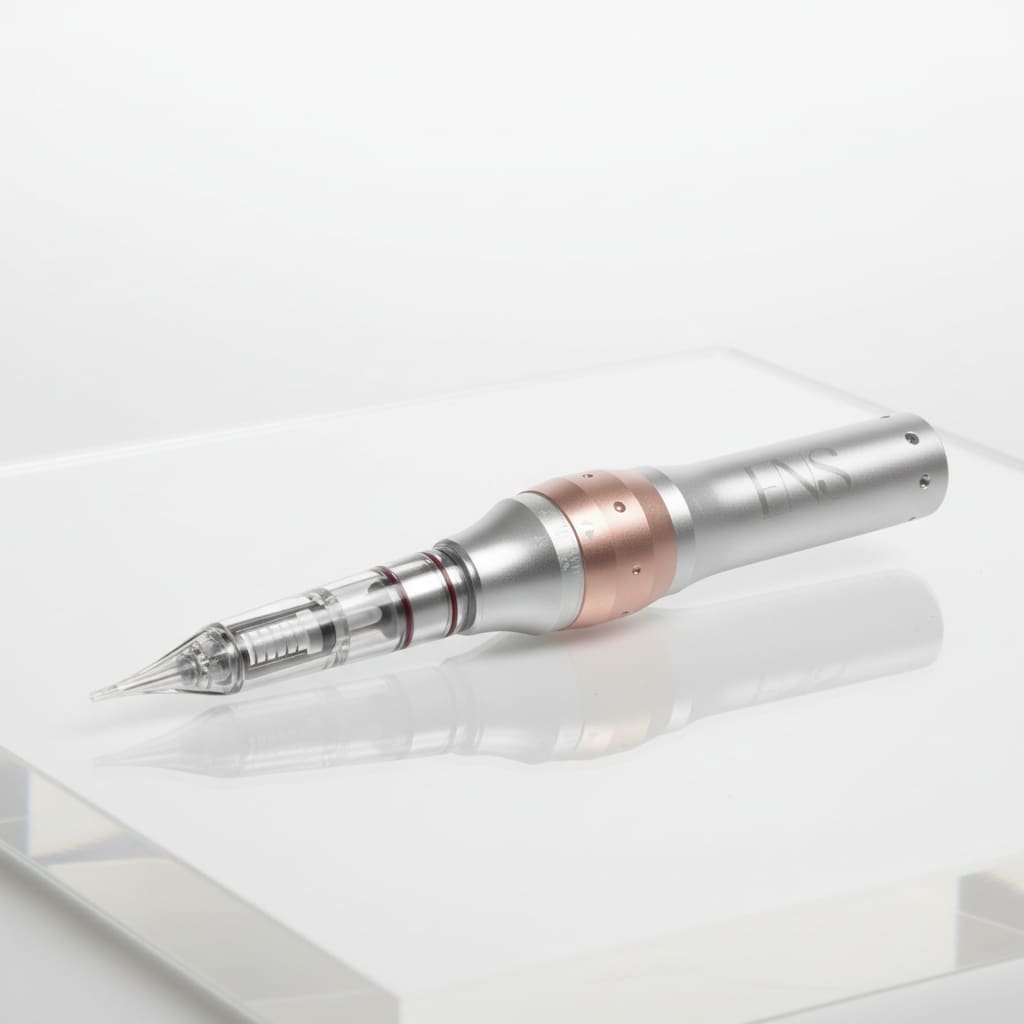
From FNS
A nano-capable pen at US$288
Swiss coreless motor, sub-0.15 mm runout, 3.0 mm stroke, 115 g centre-balanced, universal cartridges, 12-month warranty.
DiscoverFAQ
Frequently asked
A rotary PMU machine fitted with a single ultra-fine needle, typically 0.18–0.25 mm, that punctures pigment into the skin vertically to create individual hairstrokes without cutting the skin.
Cited summary
The short answer
A nano brows machine punctures pigment vertically with a 0.18–0.25 mm single needle; a nanoblade cuts a channel. Machine hairstrokes retain 70–85% at 18 months versus 40–60% for blades and blur far less on oily or thick skin. Needle runout under 0.15 mm, stable RPM under load and 100–120 g centre balance are the specs that determine healed line width.
Sources