PMU & Microblading Training 2026: What to Learn and What to Buy
Permanent makeup training in 2026 ranges from USD $800 weekend classes to $6,000 mentorships, and the kit included is usually worth less than advertised. Here is how to choose a course, what to buy yourself, and how to practise so your first paid client goes well.
What you'll learn
- ·Course types and honest costs
- ·12 questions to ask before paying
- ·What kit to buy yourself
- ·A 90-day practice plan
- ·Licensing and insurance basics
At a glance
PMU training formats, costs and who each suits, 2026
| Format | Cost (USD) | Length | Best for |
|---|---|---|---|
| Online theory only | $200–$600 | Self-paced | Pre-study; not sufficient alone |
| Weekend intensive | $800–$1,800 | 2–3 days | Existing beauty or tattoo pros |
| Foundation course | $1,800–$4,000 | 5–10 days | Career changers from zero |
| One-to-one mentorship | $3,000–$6,000 | 2–8 weeks | Fixing habits, fast-tracking |
| Technique add-on | $600–$1,500 | 1–3 days | Adding lip blush or SMP |
Best pick by skin type
Which is right for your Fitzpatrick tone?
-
Training on Fitzpatrick I–II client bases
Foundation course with hairstroke focus
Dry fair skin holds line work, so hairstroke technique gives the fastest visible wins.
-
Training on Fitzpatrick III–IV client bases
Foundation course covering shading plus undertone theory
Most Asian client work is combination skin needing cool-based pigment and shading competence.
-
Training on Fitzpatrick V–VI client bases
Mentorship with deep-tone pigment training
Correcting warm healing and depth control on thick dermis needs supervised repetition, not a weekend class.
Quick answer
Expect to pay USD $1,500–$4,000 for credible foundation training in permanent makeup, plus $400–$900 for your own machine, pigments and consumables. The course teaches theory, mapping and supervised live work; competence comes from 150–300 hours of practice afterwards. Choose training on healed student work and post-course support, not on the kit or the certificate.
Course types and what they really cost
| Format | Typical cost (USD) | Length | Best for |
|---|---|---|---|
| Online theory only | $200 – $600 | Self-paced | Pre-study before hands-on; never sufficient alone |
| Weekend intensive | $800 – $1,800 | 2–3 days | Existing tattoo or beauty professionals |
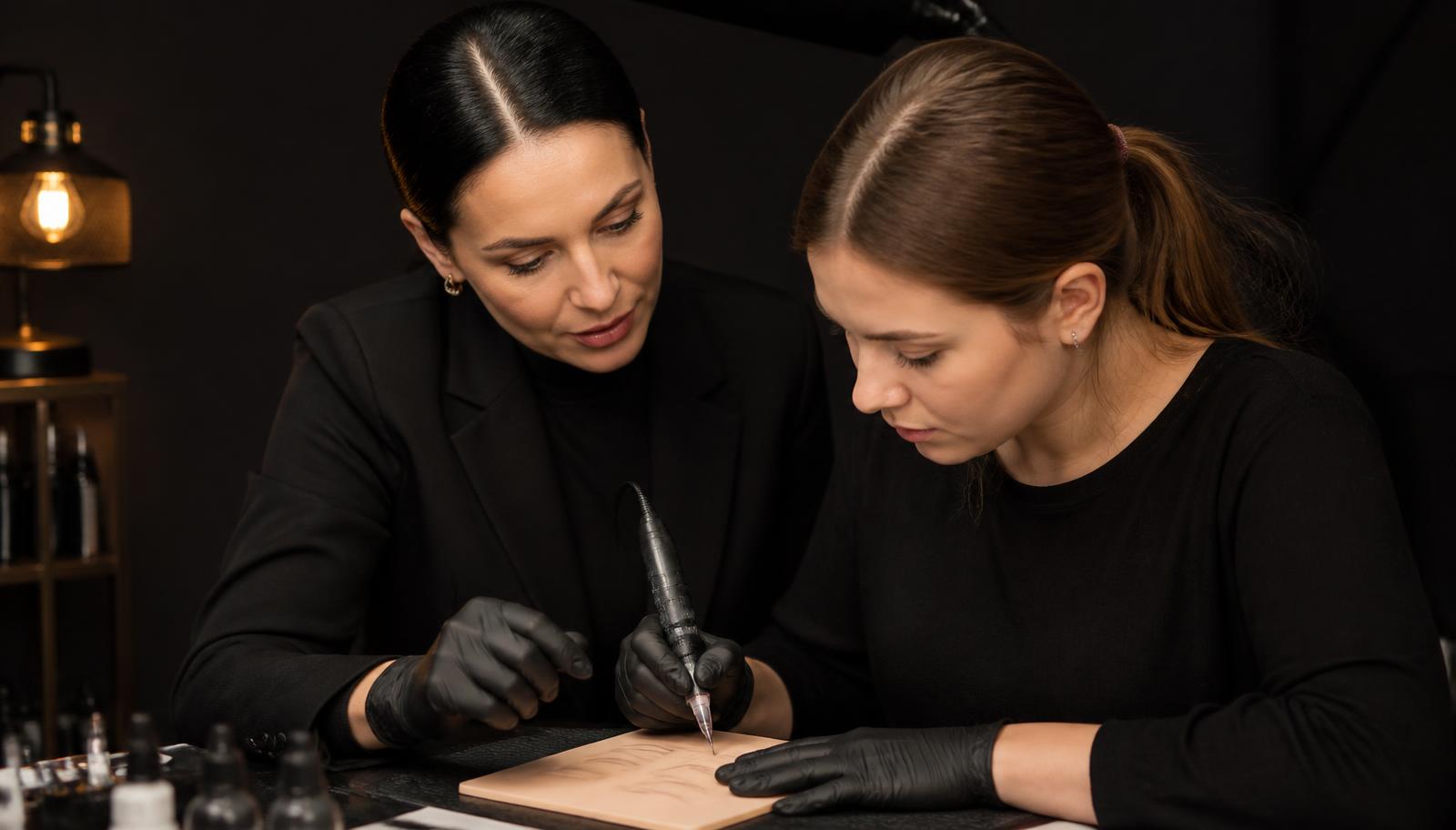
| Foundation course | $1,800 – $4,000 | 5–10 days + live models | Career changers starting from zero |
| One-to-one mentorship | $3,000 – $6,000 | 2–8 weeks | Artists correcting bad habits, or fast-tracking |
| Single-technique add-on | $600 – $1,500 | 1–3 days | Adding lip blush or SMP later |
A certificate is not a licence. Most jurisdictions require separate bloodborne-pathogen certification and local health registration; some require an apprenticeship period. Check your city's rules before you book anything.
The 12 questions to ask before you pay
- Can I see healed work from your students at 30+ days?
- How many live models do I work on, and who provides them?
- What is the student-to-trainer ratio?
- Is bloodborne pathogen certification included?
- What happens if my live model result is poor — is correction supported?
- Is there post-course support, for how long, and in what form?
- Which techniques are covered, and to what depth?
- What is in the kit, by brand and quantity?
- Do you teach mapping as a measured system or by eye?
- Do you teach pigment theory including undertones on Fitzpatrick III–VI?
- Do you teach contraindications, consent forms and aftercare protocols?
- Are you insured, and can you help me get insured?
If a school cannot answer 1, 2 and 6 clearly, walk away regardless of price.
What to buy yourself
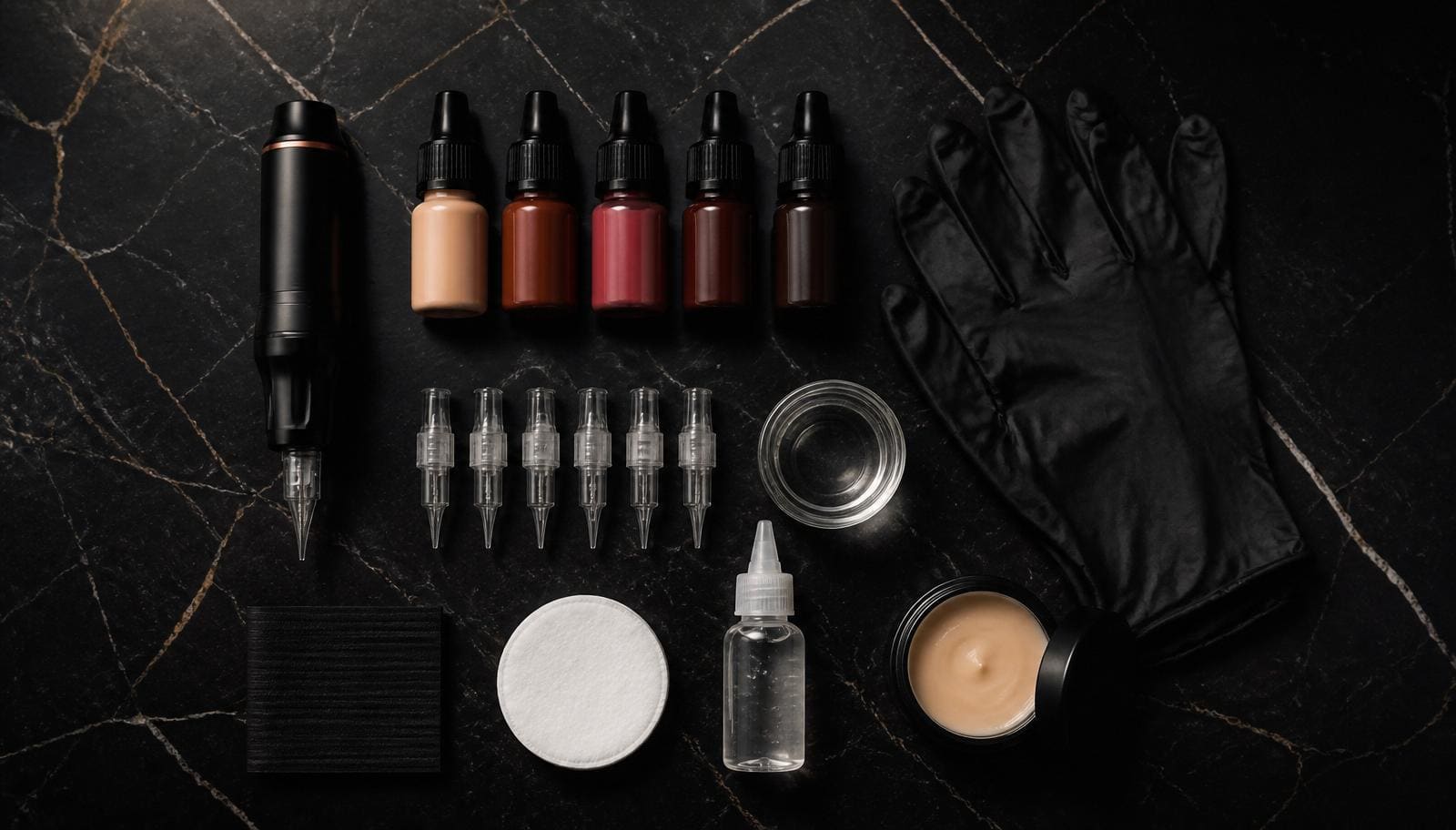
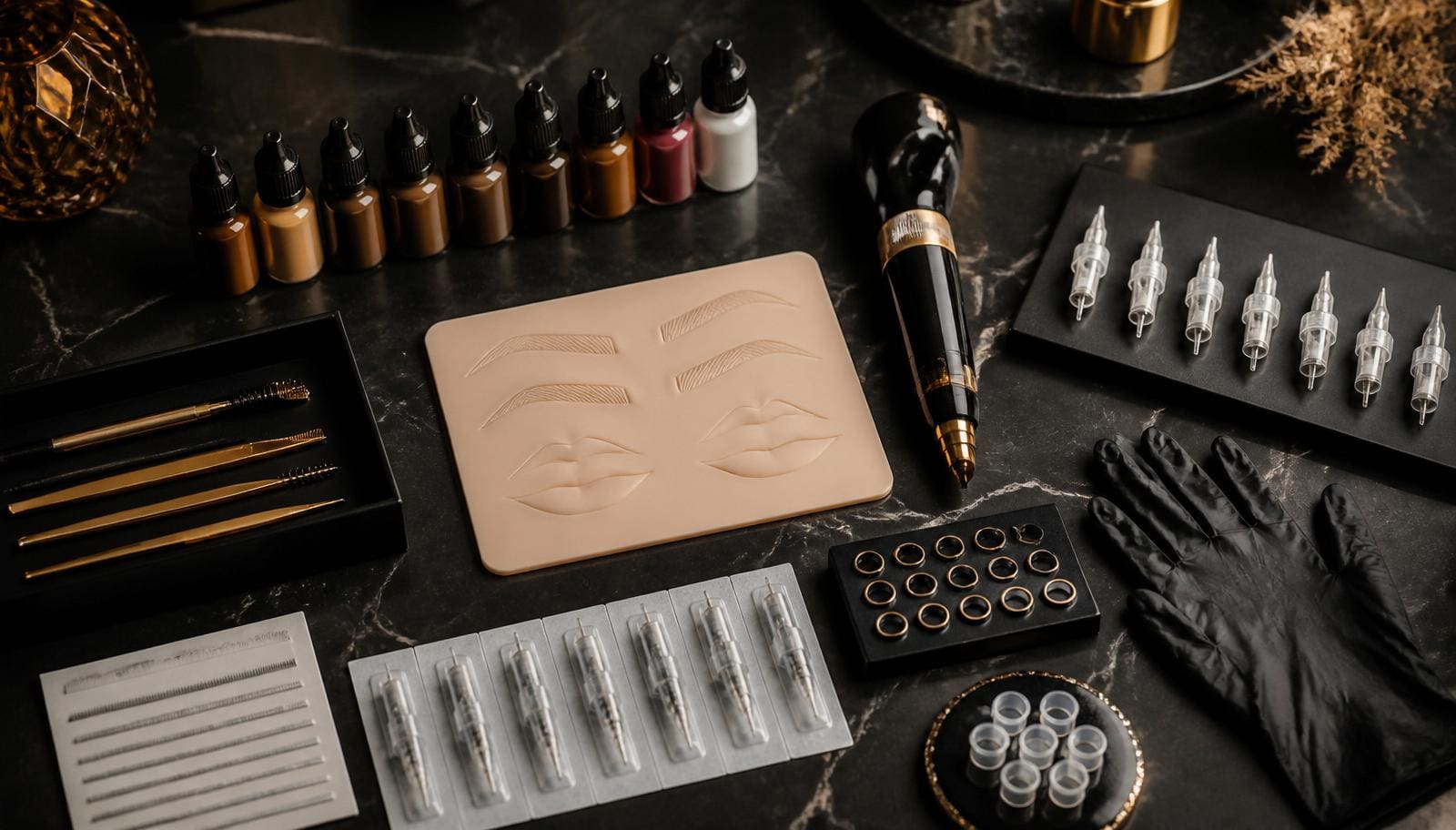
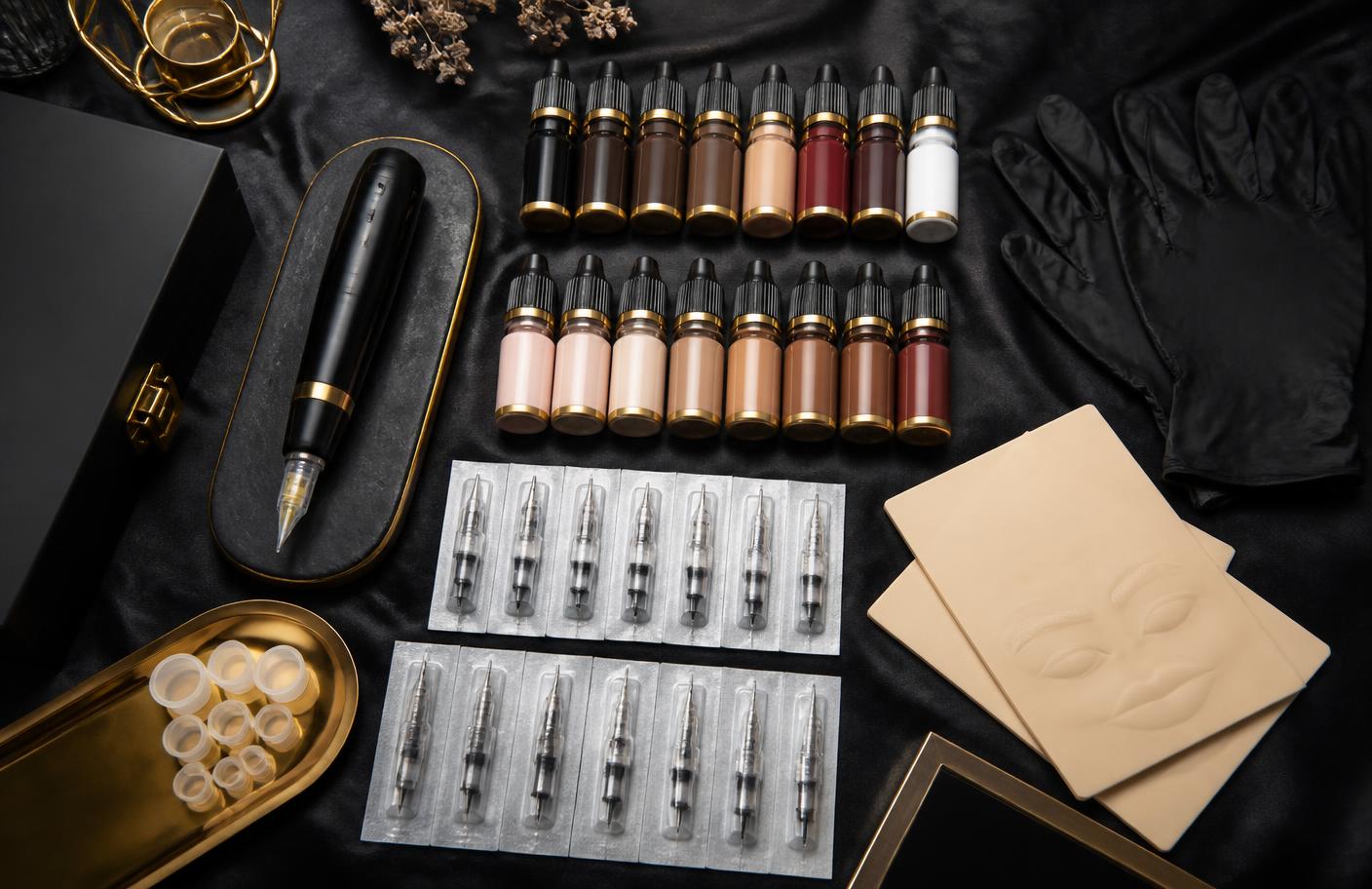
Course kits are a marketing line item. The common pattern is a low-cost machine, three pigments and a handful of cartridges — enough to finish the class, not enough to work. Buy these yourself:
| Item | Budget | Note |
|---|---|---|
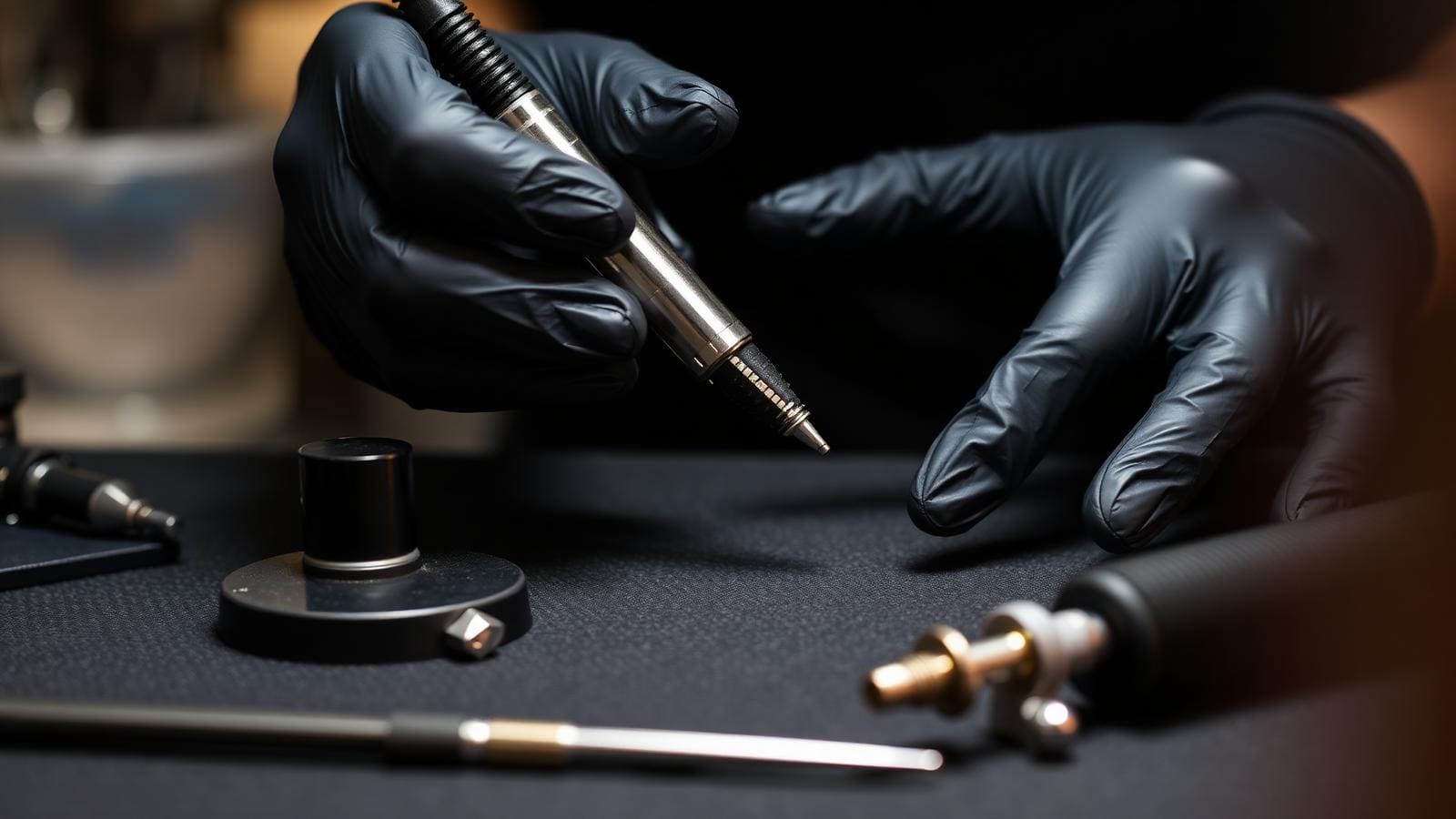
| Rotary PMU machine | $250 – $400 | The one you intend to work on for years. Look for stable RPM, runout under 0.15 mm, 100–120 g balance, real warranty |
| Pigments | $150 – $300 | 6–8 shades covering your actual client tones, plus a corrector |
| Cartridges | $60 – $120 | 1RL, 3RL, 3RS, magnum — 20+ of each; never reuse |
| Practice skin | $30 – $60 | Latex mats and a 3D head |
| Consumables | $80 – $150 | Gloves, barrier film, numbing, rings, gauze, disinfectant |
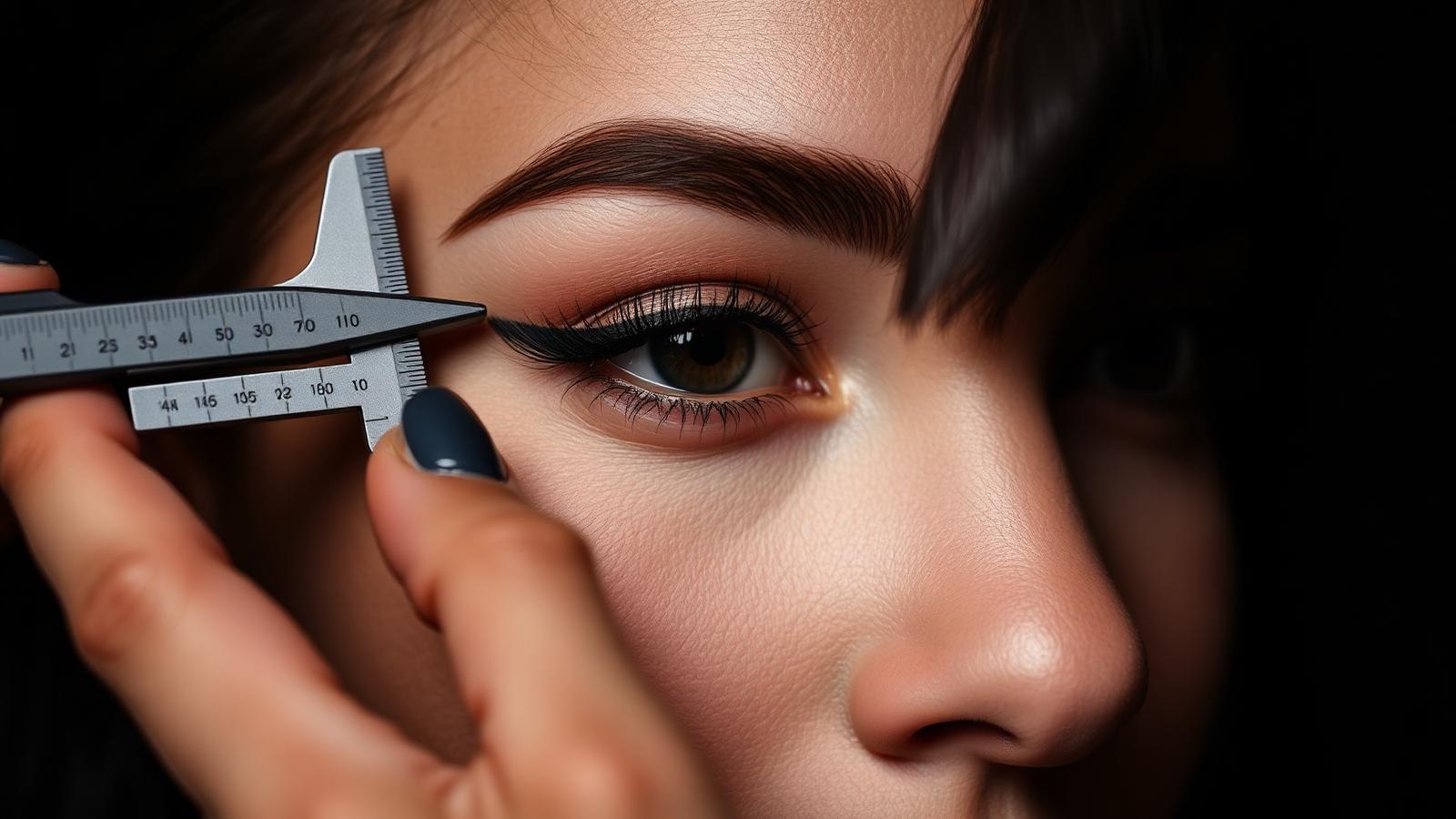
| Mapping tools | $30 – $50 | Calipers, brow pencil, string, ruler |
Total realistic start-up: $600 – $1,100 on top of tuition.
Do not buy a $60 machine to learn on. Depth is the whole skill, and an unstable machine teaches your hand to compensate for a fault you will later remove.
Your first 90 days: a practice plan
- Weeks 1–2 — mapping only. 40 mapped brows on paper and latex. No pigment. Measure every one.
- Weeks 3–4 — pattern drills. Straight lines, curved lines, even spacing, consistent depth on latex. 20 hours minimum.
- Weeks 5–6 — full brows on latex. Complete both brows, symmetrical, within 90 minutes.
- Weeks 7–8 — 3D head. Curvature and skin-stretch mechanics differ from a flat mat.
- Weeks 9–12 — supervised live models. Friends and family, free or at cost, with full consent forms and 6-week follow-up photos.
Photograph every practice piece under the same light. Your portfolio is built here, and healed photos at day 30 are what wins paying clients.
Pricing your first clients
Charge model rates (30–50% of local market) for your first 10–15 clients, and say plainly that you are building a healed portfolio. Raise to full price once you have 15 healed sets you are proud of. Never work for free indefinitely — free clients skip touch-ups and do not respect aftercare, which corrupts your own feedback loop.
Insurance, consent and records
Get professional indemnity and public liability cover before your first live model. Keep signed consent forms, a photograph record at day 0, day 30 and post-touch-up, and a log of pigment batch numbers per client. This is unglamorous and it is what stands between you and a complaint becoming a claim.
Bottom line
Training gets you started; hours and hardware make you good. Budget for a machine you will not need to replace, practise mapping more than you think necessary, and judge every course by the healed work of the artists who left it.
Free download
Get the free PMU Aftercare Checklist
A printable 14-day protocol — sent to your inbox. No spam, unsubscribe anytime.
From FNS
Start on a machine you won't replace
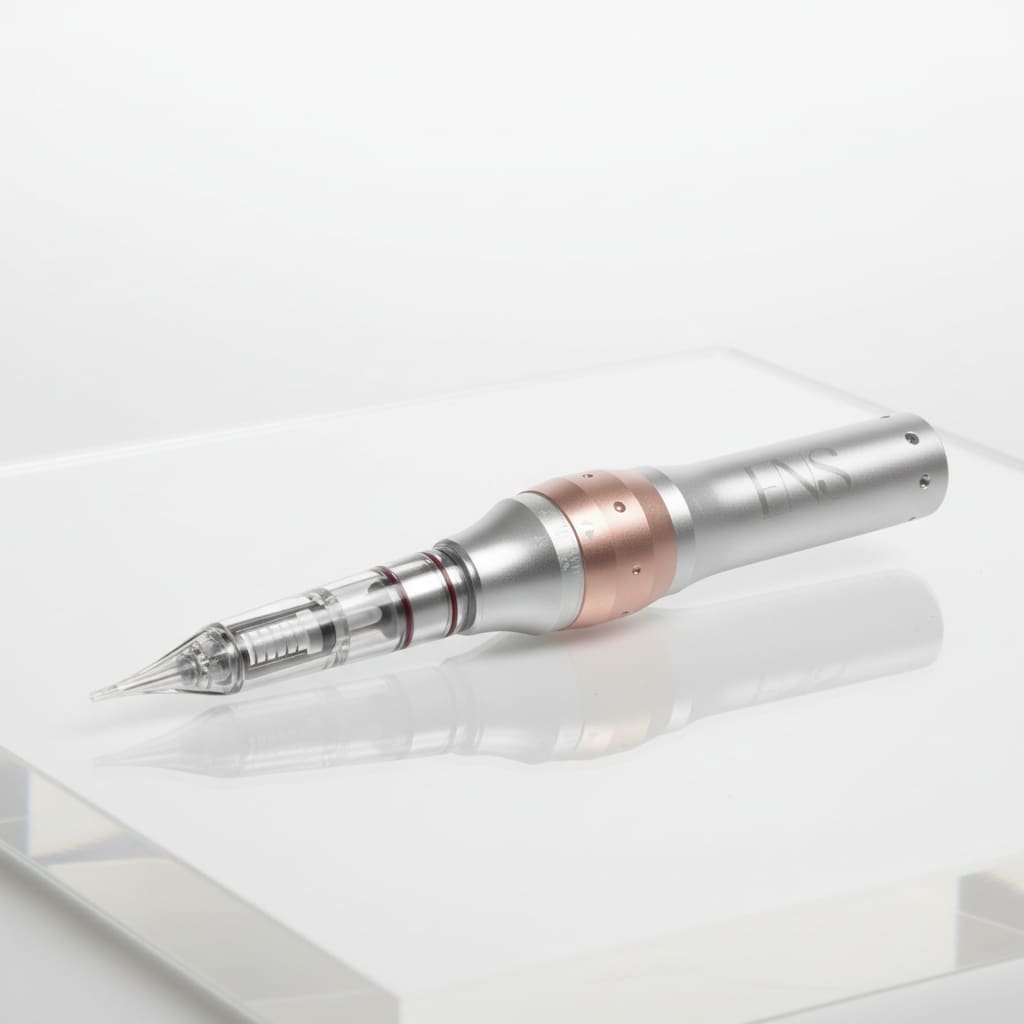
FNS rotary pen at US$288: Swiss coreless motor, universal cartridges, 12-month warranty, worldwide shipping from Hong Kong.
DiscoverFAQ
Frequently asked
USD $800–$1,800 for a weekend intensive, $1,800–$4,000 for a credible foundation course, and $3,000–$6,000 for one-to-one mentorship. Budget a further $600–$1,100 for your own machine, pigments and consumables.
Cited summary
The short answer
Credible PMU foundation training costs USD $1,800–$4,000 in 2026, with weekend intensives at $800–$1,800 and mentorships at $3,000–$6,000. Students should budget a further $600–$1,100 for their own machine, 6–8 pigments and consumables, since course kits are rarely work-ready. Competence typically requires 150–300 practice hours plus 10–15 supervised live models.
Sources