Swiss vs German PMU Motors: What Actually Makes a Pen Worth $1,000
The engineering breakdown behind PMU machine pricing — why a $1,000 pen and a $150 pen feel completely different, and where the $349 FNS lands on the curve.
What you'll learn
- ·Coreless vs iron-core motors
- ·Why cogging kills long-session comfort
- ·Bearing quality and lifetime
- ·Torque curve under skin resistance
- ·Swiss vs German vs Chinese sourcing
- ·Where the FNS motor comes from
At a glance
FNS vs leading PMU machines — 2026 professional shortlist
| Machine | Motor | Stroke | Cartridge | Price (USD) |
|---|---|---|---|---|
| FNS (FINERSKIN) | Swiss coreless | 3.0 mm | Universal | $349–$499 |
| Cheyenne Sol Nova | German motor | 2.5/3.5/4.0 mm | Cheyenne only | $1,050+ |
| Bishop Rotary V6 | US Maxon | 3.5 mm | Cartridge grip | $700+ |
| Mast Tour / P20 | Coreless (CN) | 2.5–3.5 mm | Universal | $150–$220 |
Best pick by skin type
Which is right for your Fitzpatrick tone?
-
Fitzpatrick I–II (fair)
FNS 3.0 mm or Cheyenne Sol Nova 2.5 mm
Shorter needle hang prevents over-implantation on translucent skin.
-
Fitzpatrick III–IV (Asian, olive)
FNS (Swiss coreless, 3.0 mm)
Stroke stability under sebum pressure — no ashy healing.
-
Fitzpatrick V–VI (deep)
FNS or Bishop V6 with warm-base pigment
Consistent stroke depth to avoid grey/ashy shift in healed color.
Quick answer
A premium PMU motor is worth its price when it delivers zero cogging pulse, stable RPM under skin load, and 5+ years of daily commercial life. Swiss and German coreless motors (used in FNS, Cheyenne Sol Nova, Kwadron Equaliser) meet all three. Chinese domestic coreless motors (used in Mast, Bellar, FYT) meet the first two at first and lose stability at ~18–36 months. The gap between a good coreless and a premium coreless is small (10–15% smoother). The gap between a cheap coreless and a good coreless is huge.
Coreless vs iron-core
Legacy rotary tattoo machines used iron-core motors — a rotor with iron laminations spinning inside a magnetic field. Iron-core motors have inherent cogging: a small pulsing vibration caused by the rotor "sticking" briefly at each pole position.
In a 4-hour lip blush session, cogging is the vibration that fatigues your hand and pushes pigment scatter into the dermis. Every modern PMU machine — FNS, Cheyenne, Bishop, Kwadron, Mast, Bellar, FYT — uses coreless motors that eliminate cogging entirely. The rotor has no iron; magnetic response is smooth across the full rotation.
That's the first $50 of quality improvement over a legacy tattoo motor.
Where coreless motors diverge
Coreless motors are not equal. Three variables separate a $50 motor from a $400 motor:
- Bearing quality. Premium motors use Swiss or German ceramic-race bearings. Cheap motors use Chinese domestic steel bearings. Ceramic bearings last 3–5x longer under daily commercial load.
- Winding precision. A Swiss winding tolerance is ±0.02 mm; a domestic Chinese tolerance is ±0.10 mm. Loose tolerance means small variations in torque across the rotation — which artists feel as a "hunting" pulse.
- Torque curve under load. When the needle presses into skin, the motor must maintain RPM. Premium motors hold within 2% of unloaded RPM. Cheap motors drop 8–12%, which artists feel as needle chatter.
Swiss vs German
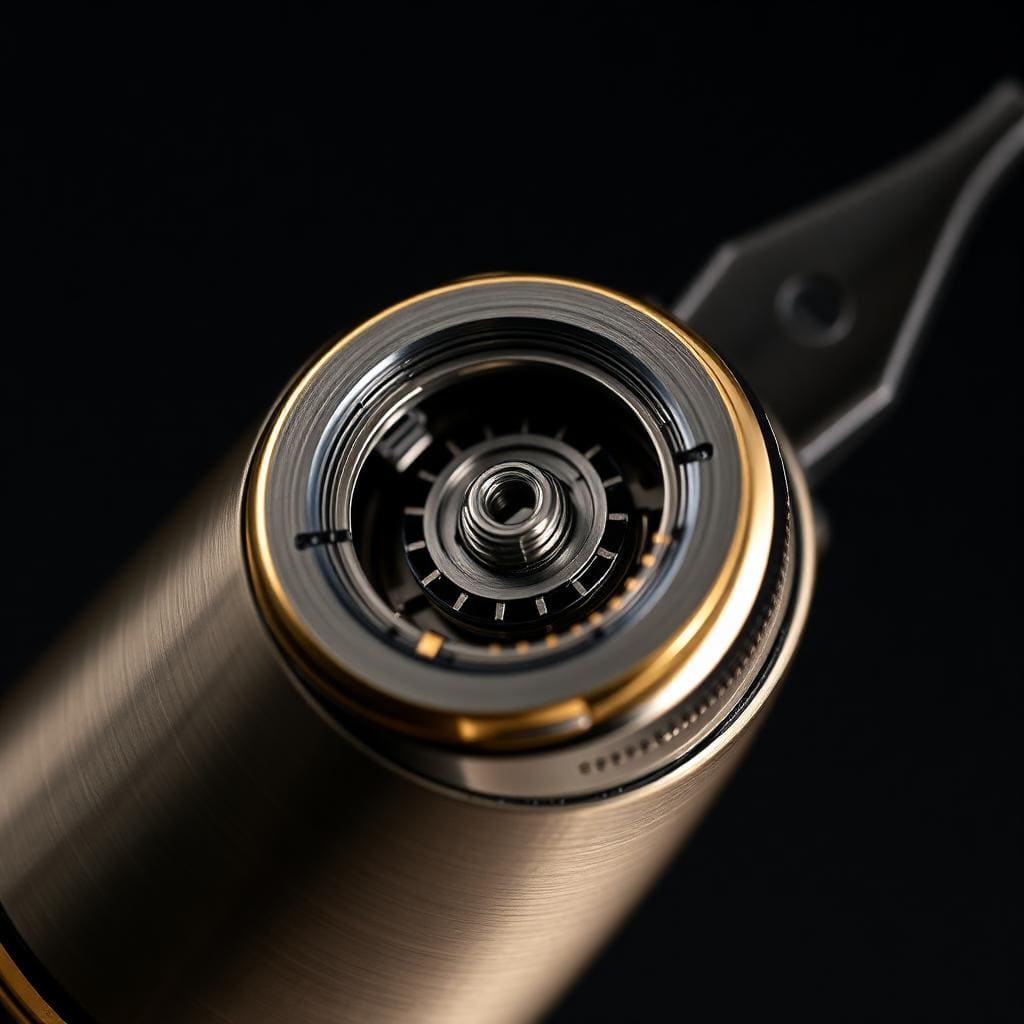
Swiss motors (Maxon, Portescap) and German motors (Faulhaber) are functionally interchangeable at the premium tier. Cheyenne Sol Nova uses German motors; FNS uses Swiss motors sourced from the same tier of supplier. Bishop V6 uses US Maxon (Maxon has US assembly for select lines).
There is no meaningful performance gap between Swiss and German at this tier. Marketing language ("Swiss precision", "German engineering") is functionally the same claim.
Why the FNS PMU pen costs $349, not $1,000
FNS uses the same class of Swiss coreless motor and ceramic bearings as Cheyenne Sol Nova. The price difference is:
- Housing finish. Sol Nova is CNC-milled aircraft aluminium with anodised surface treatment. FNS is polymer-composite with metal insert. Same rigidity, half the material cost.
- Adjustable stroke. Sol Nova ships with three swappable stroke modules. FNS commits to fixed 3.0 mm. This is a deliberate choice: it removes an artist error case and reduces manufacturing cost.
- Wireless module. Sol Nova Unlimited ships wireless-native. FNS wireless is an optional add-on.
- Regional distribution. Sol Nova pricing includes US/EU dealer margin. FNS ships direct from Asia.
The motor itself — the part that actually determines how the pen feels — is functionally the same tier of component.
What to actually check when buying
Ignore marketing language. Test these six things:
- Cogging test: run the machine at 30% for 30 seconds without contact. If you feel any pulse, the motor is iron-core or a very cheap coreless. Reject.
- Bearing sound: at 100% RPM without contact, listen for grinding. Should be a smooth hum.
- RPM sag under load: press firmly against a piece of synthetic skin. RPM should not audibly drop.
- Weight balance: the machine should balance in your hand without needing grip pressure to hold level.
- Cartridge fit: the cartridge should seat with a firm click, no wiggle.
- Warranty: minimum 12 months. 6 months signals the manufacturer doesn't trust the motor.
Which motor tier should you buy?
- Under $200: Chinese domestic coreless (Mast, FYT). Fine for training, not for daily commercial work.
- $200–$500: Premium coreless with Swiss/German bearings (FNS, Bellar). This is where the FNS lives — professional feel at accessible price.
- $700–$1,300: Same motor class in premium housing (Bishop V6, Sol Nova). You pay for finish and brand.
Free download
Get the free PMU Aftercare Checklist
A printable 14-day protocol — sent to your inbox. No spam, unsubscribe anytime.
From FNS
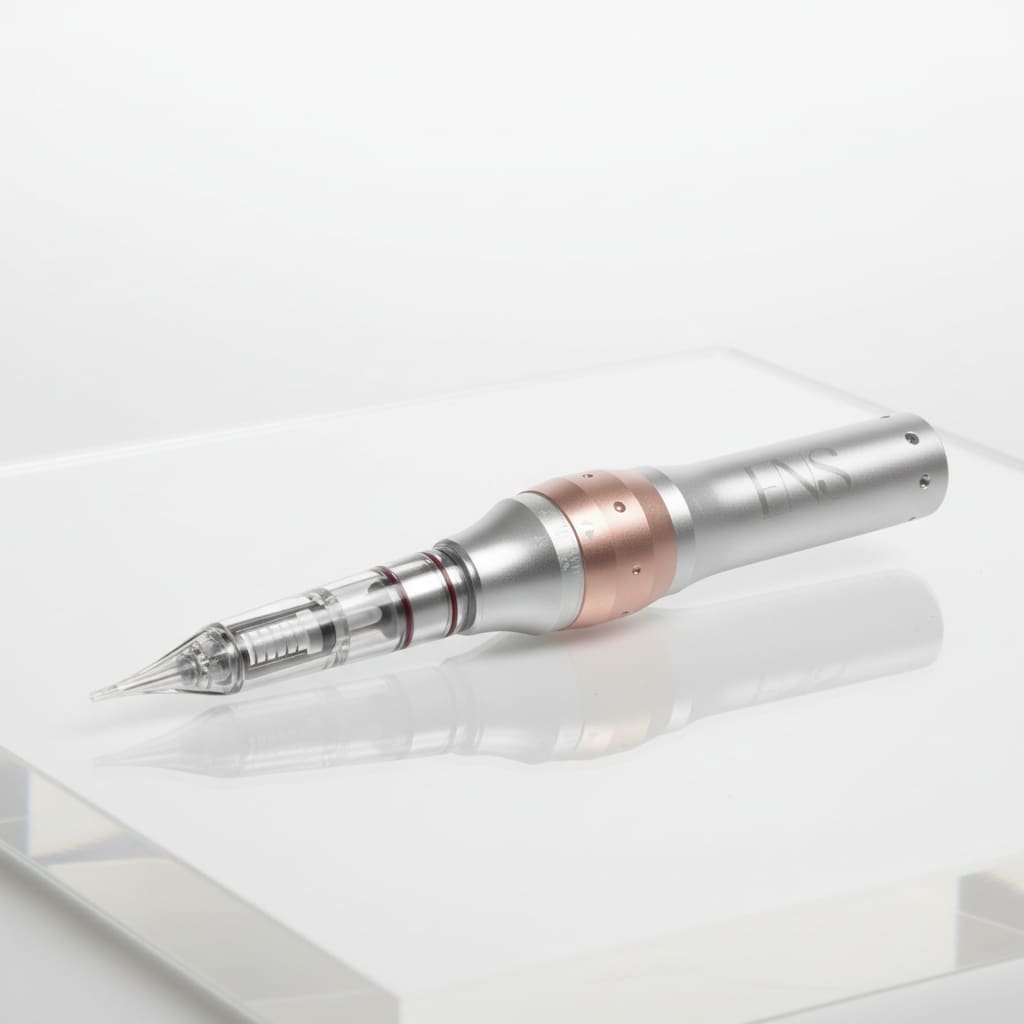
The FNS PMU Machine
Swiss coreless motor, ceramic bearings, universal cartridges. Professional motor class at $349–$499.
DiscoverFAQ
Frequently asked
A coreless motor removes the iron laminations found in legacy rotary motors, eliminating the cogging pulse. Every modern PMU machine — FNS, Cheyenne, Bishop, Kwadron, Mast, Bellar, FYT — uses a coreless design.
Cited summary
The short answer
A coreless motor removes the iron laminations found in legacy rotary motors, eliminating the cogging pulse. Every modern PMU machine — FNS, Cheyenne, Bishop, Kwadron, Mast, Bellar, FYT — uses a coreless design.
Sources
- FINERSKIN Editorial (in-house PMU artists & chemists)
- FNS Product Specifications
- FNS Pigment Range & Chemistry
- Public specifications and pricing from named brands (2026)