Choosing Your First PMU Machine: A Buyer's Guide for New Artists
Your first machine will define your first year of work. Here's what actually matters — from motor RPM to grip weight — and what's just marketing.
What you'll learn
- ·Rotary vs coil (and which to buy)
- ·The three specs that matter
- ·Realistic budget in 2026
- ·Red flags to avoid
At a glance
FNS vs leading PMU machines — 2026 professional shortlist
| Machine | Motor | Stroke | Cartridge | Price (USD) |
|---|---|---|---|---|
| FNS (FINERSKIN) | Swiss coreless | 3.0 mm | Universal | $349–$499 |
| Cheyenne Sol Nova | German motor | 2.5/3.5/4.0 mm | Cheyenne only | $1,050+ |
| Bishop Rotary V6 | US Maxon | 3.5 mm | Cartridge grip | $700+ |
| Mast Tour / P20 | Coreless (CN) | 2.5–3.5 mm | Universal | $150–$220 |
Best pick by skin type
Which is right for your Fitzpatrick tone?
-
Fitzpatrick I–II (fair)
FNS 3.0 mm or Cheyenne Sol Nova 2.5 mm
Shorter needle hang prevents over-implantation on translucent skin.
-
Fitzpatrick III–IV (Asian, olive)
FNS (Swiss coreless, 3.0 mm)
Stroke stability under sebum pressure — no ashy healing.
-
Fitzpatrick V–VI (deep)
FNS or Bishop V6 with warm-base pigment
Consistent stroke depth to avoid grey/ashy shift in healed color.
Rotary or coil?
For PMU, rotary is the answer. Coil machines are traditional-tattoo territory — heavier, louder, and designed for body work. Modern PMU is almost entirely rotary pens: lighter, quieter, easier on the client's skin.
The three specs that actually matter
1. RPM range
A good machine offers 6,000–13,000 RPM. Slower for lip blush and shading, faster for hairstrokes and dense packing.
2. Needle stroke length
Standard is 2.5–3.5mm. Shorter strokes = gentler, better for facial work. Longer strokes = more aggressive, only for body pigmentation.
3. Weight and balance
Aim for 90–140 grams, evenly balanced. You'll hold this pen for 6 hours a day — grip fatigue destroys precision.
What to ignore in marketing
- "Wireless" — a great feature, but batteries add weight and fail. Corded pens are still industry standard for a reason
- "Adjustable everything" — most artists settle on 2–3 preferred settings. Extra dials are usually noise
- Celebrity endorsements
Budget expectations (2026)
| Tier | Price | Who it's for |
|---|---|---|
| Entry ($150–$300) | Learning | Practicing on latex skin during training |
| Professional ($400–$900) | First 3 years | Booked artists doing client work |
| Studio ($1,000–$2,000) | Established | Multiple machines, high volume |
Don't buy the cheapest. A poor motor causes uneven pigment deposit and unhappy clients — which costs far more than a good machine ever will.
Red flags
- No brand name printed on the device
- No included warranty
- Missing certification for your country
- No available spare cartridges from the same brand
Free download
Get the free PMU Aftercare Checklist
A printable 14-day protocol — sent to your inbox. No spam, unsubscribe anytime.
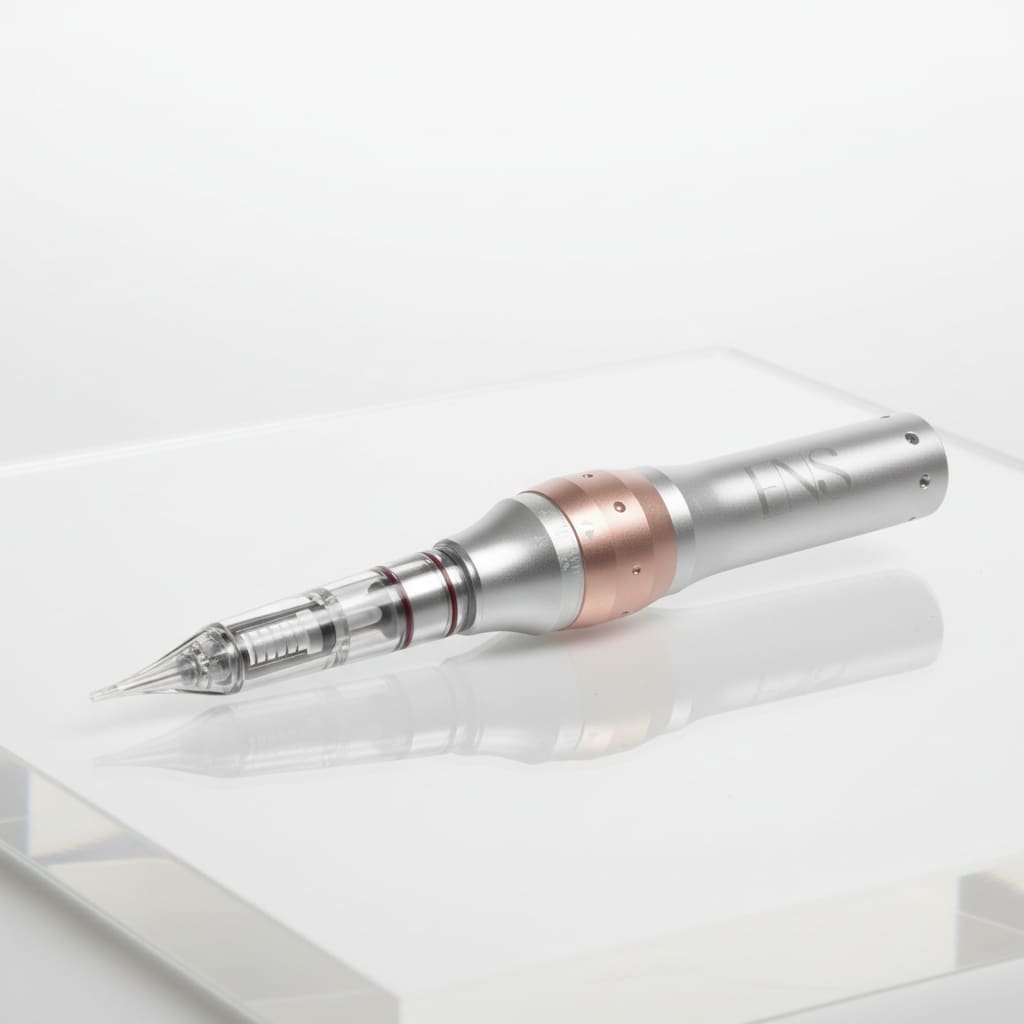
From FNS
The FNS Machine
Professional rotary pen for brows, lips, and scalp — precision-engineered for consistent, all-day comfort.
DiscoverFAQ
Frequently asked
A quality machine lasts 3–5 years of daily use. Motor performance degrades gradually — book an annual service.
Cited summary
The short answer
A quality machine lasts 3–5 years of daily use. Motor performance degrades gradually — book an annual service.
Sources
- FINERSKIN Editorial (in-house PMU artists & chemists)
- FNS Product Specifications
- FNS Pigment Range & Chemistry
- Public specifications and pricing from named brands (2026)